Explore Readicate
Discover what readers are highlighting, which books are resonating, and find intellectual companions.
Classics to Read
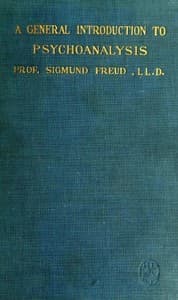
A General Introduction to Psychoanalysis
Freud, Sigmund
A Selection from the Discourses of Epictetus with the Encheiridion
Epictetus

A Tale of Two Cities
Dickens, Charles

A Vindication of the Rights of Woman: With Strictures on Political and Moral Subjects
Wollstonecraft, Mary
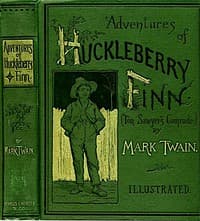
Adventures of Huckleberry Finn
Twain, Mark
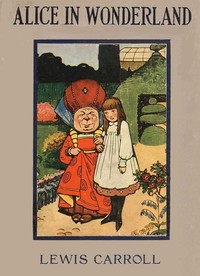
Alice's Adventures in Wonderland
Carroll, Lewis
An Enquiry Concerning Human Understanding
Hume, David
An Essay Concerning Humane Understanding, Volume 1: MDCXC, Based on the 2nd Edition, Books 1 and 2
Locke, John
An Essay on the Principle of Population
Malthus, T. R. (Thomas Robert)

An Inquiry into the Nature and Causes of the Wealth of Nations
Smith, Adam

Anna Karenina
Tolstoy, Leo, graf
Apology
Plato
Autobiography of Benjamin Franklin
Franklin, Benjamin

Bacon's Essays, and Wisdom of the Ancients
Bacon, Francis

Beyond Good and Evil
Nietzsche, Friedrich Wilhelm
Candide
Voltaire
Common Sense
Paine, Thomas
Crime and Punishment
Dostoyevsky, Fyodor
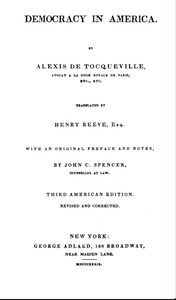
Democracy in America — Volume 1
Tocqueville, Alexis de
Discourse on the Method of Rightly Conducting One's Reason and of Seeking Truth in the Sciences
Descartes, René
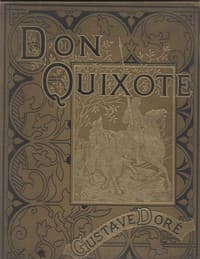
Don Quixote
Cervantes Saavedra, Miguel de
Dracula
Stoker, Bram

Dream Psychology: Psychoanalysis for Beginners
Freud, Sigmund
Essays by Ralph Waldo Emerson
Emerson, Ralph Waldo

Essays of Michel de Montaigne — Complete
Montaigne, Michel de

Ethics
Spinoza, Benedictus de

Evidence as to Man's Place in Nature
Huxley, Thomas Henry

Evolution and Ethics, and Other Essays
Huxley, Thomas Henry
![Faust [part 1]. Translated Into English in the Original Metres](/_next/image?url=https%3A%2F%2Fwww.gutenberg.org%2Fcache%2Fepub%2F14591%2Fpg14591.cover.medium.jpg&w=3840&q=75)
Faust [part 1]. Translated Into English in the Original Metres
Goethe, Johann Wolfgang von
First Principles
Spencer, Herbert
Recent Highlights
“"Seeing comes before words." In this opening section, Berger argues that children recognize the world through seeing before they learn to speak. Our first relationship with the world is established through vision. He then develops a central idea of the book: what we see is never determined by our eyes alone. Our knowledge, beliefs, memories, and cultural background all shape the way we see. As a result, two people can look at the same image yet perceive it differently.”
“The life you've constructed is a direct reflection of your focus on what matters. Life is easier when you focus on what you have rather than what's missing. Life is easier when you focus on what you can control. Life is easier when you focus on what's happening now. Life is easier when you focus on solutions, not problems. Life is easier when you focus on progress, not perfection.”
“We are shaped by sentences long before we understand ourselves. A single line, read at the right moment, can redirect a life. This is what Readicate is for: to notice which words are quietly rebuilding you. To read is to write yourself anew.”
“The difference between being and having is not essentially that between East and West. The difference is rather between a society centered around persons and one centered around things.”
“Living structures can be only if they become; they can exist only if they change. Change and growth are inherent qualities of the life process.”
““People should not consider so much what they are to do as what they are. … Thus take care that your emphasis is laid on being good and not on the number or kind of things to be done. Emphasize rather the fundamentals on which your work rests.””
“We are a society of notoriously unhappy people: lonely, anxious, depressed, destructive, dependent—people who are glad when we have killed the time we are trying so hard to save.”
“On the Shabbat one lives as if one has nothing, pursuing no aim except being, that is, expressing one’s essential powers: praying, studying, eating, drinking, singing, making love.”
Popular Books
Readers
Ready to discover your intellectual identity?